






 Boyhood, as you may have heard, is a special film because it was shot over the course of a 12-year period with the same cast and much of the same crew. It’s gimmicky, sure, but it’s also a testament to writer/director Richard Linklater’s commitment and ambition (as well as that of his collaborators). And it just so happens that his gimmick works beautifully.
Boyhood
Directed by Richard Linklater – 2014
Reviewed by Mark Kines
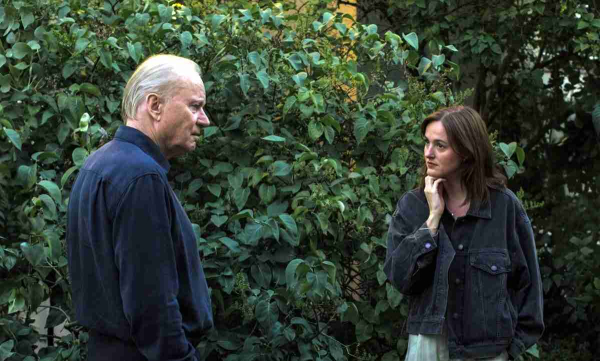
As you might expect with a film that unfolds over the course of a dozen years, Boyhood does not adhere to a strict plot. Stuff happens, sure, but this is for all intents and purposes a “hangout movie”, where we spend time with a Texas kid named Mason Evans (Ellar Coltrane) as he ages from 6 to 18. But it’s not just Mason who grows and develops; we also see how his parents (Patricia Arquette and Ethan Hawke) and sister (Lorelei Linklater, the director’s daughter) change over the years. The full effect is quite poignant, and in a number of ways.
First of all, of course, it’s affecting to see these people transform before our very eyes. No old age makeup is required. We are watching the effects of twelve years of time on these faces, all in the space of nearly three hours (Boyhood is fairly long). Arquette, in particular, invites reflection on her career. I was reminded that in 2002, when this film went into production, she was still a fairly major movie star. Then her A-list status cooled, she starred on a middling TV show (Medium), and now she’s the sort of actor who special-guests on shows like Law & Order: Special Victims Unit. And through it all her work on Boyhood kept chugging along.
Second, lifelong Texan Linklater has made this, like many of his other films, a sort of love letter to his state. From small towns and state parks to big cities like Houston and Austin, Texas, in all its dusty beauty, is very lovingly shot.
Third, I couldn’t get over how different the film might have felt had Mason/Ellar grown up during the ’70s and ’80s, like I did, or even during the ’60s and ’70s. My point is that those were two major periods of cultural change, in which people not only looked and dressed radically differently as the years progressed, but films were even made differently. In comparison, cultural shifts between 2002 and 2013 have been minimal. Yes, we’ve seen some major changes in everyday behavior thanks to the introduction of social networking and the smartphone, but otherwise pop music sounds the same, people dress the same, and movies look the same. (Boyhood is seamless in its visual tone. 2002 looks like 2013 in more ways than one.) My friends know that I go off a lot about our current period of “cultural stagnation”, but watching Boyhood did bolster my theories.
Mainly, however, Boyhood is a moving experience because it shows that we all go through the same bumps growing up: peer pressure, stressful family dynamics, awkward romances, uncertainty about the future, inability to articulately communicate – that which was true when I was a boy is still true today, at least as Linklater represents it. Mason is a unique kid, with his own ambitions and sensitivities, but he’s also kind of an Everykid. Of course, those who didn’t grow up white, male, American, heterosexual and middle-class might be less convinced of Boyhood‘s universality. But I found it an honest and sweet little document, and certainly a one-of-a-kind movie.
Mark Tapio Kines is a film director, writer, producer and owner of Cassava Films. You can reach Mark here.










Leave a Reply